
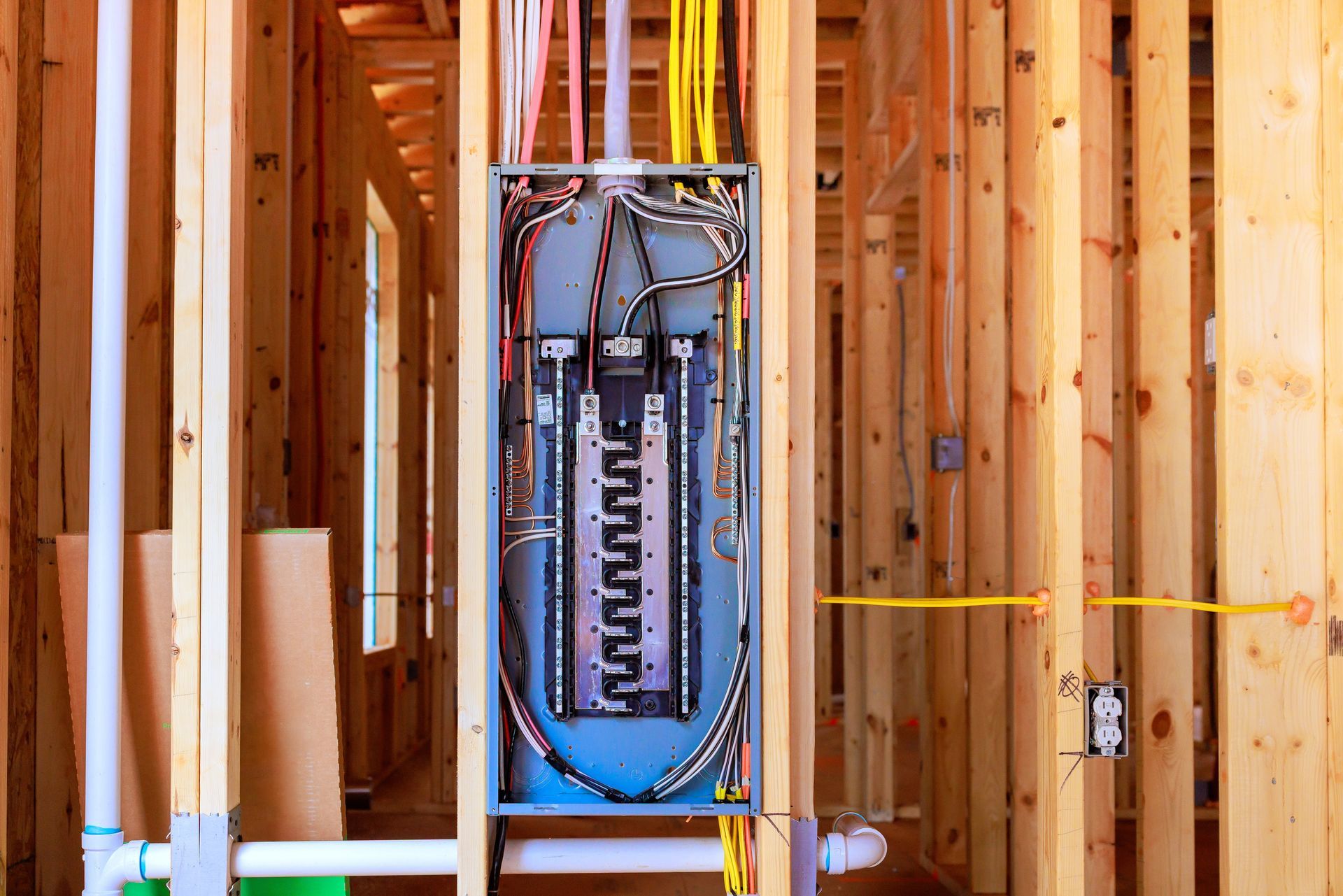
Panels Sized for Current Electrical Demands
Electrical Panel Changes in Mt. Washington for properties where aging or undersized panels no longer support household electrical loads
An electrical panel distributes power from the utility service to individual circuits throughout your property, and when that panel can no longer accommodate the circuits you need or contains outdated components that pose safety concerns, replacement becomes necessary. Homeowners in Mt. Washington often encounter panel limitations when adding central air conditioning, installing EV chargers, finishing basements, or upgrading to electric heating—situations where the existing panel either lacks physical space for additional breakers or cannot supply the amperage required by modern equipment. Mingus Electric evaluates panels that show signs of wear, insufficient capacity, or obsolete designs, then installs replacement panels that organize circuits clearly and provide adequate capacity for present and anticipated loads.
Panel changes involve more than swapping the metal box and breakers—electricians assess whether the service entrance conductors can support the new panel's rating, verify that the grounding and bonding configuration meets current code, and ensure that all existing circuits transfer correctly to the new panel without voltage drop or connection failures. This work requires temporarily de-energizing the property, so scheduling is coordinated with the homeowner to minimize disruption.
Schedule a panel assessment to determine whether your current panel meets your property's electrical needs.
What Changes After Panel Replacement
Panel replacement begins with evaluating the existing system—checking service size, inspecting wire conditions, identifying circuits that are double-tapped or improperly protected, and determining whether the new panel will require any circuit modifications to meet current code. The new panel is mounted in the same location or a nearby code-compliant position, and each circuit is reconnected with proper torque on terminal screws, verified polarity, and correctly sized breakers. All circuits are labeled by location and function, and any GFCI or AFCI protection required by current code is installed during the changeover.
Once the new panel is energized, you will notice that breaker positions are organized logically, that tripping caused by overloaded buses or worn breakers no longer occurs, and that you have available spaces for additional circuits when future projects require them. The panel door will display a clear circuit directory, and any backstabbed or improper connections from the old panel will have been corrected during the transfer.
Panel changes also address situations where Federal Pacific, Zinsco, or other panels known for connection failures and fire risk remain in service. Replacing these panels eliminates the documented failure modes associated with their design, even if the panel appears to function normally at present. Insurance companies and home inspectors frequently flag these panels, and replacing them resolves both the safety concern and the documentation issue.
Common Panel Questions
Homeowners considering panel replacement often ask about timing, capacity, and what the work involves.
What signs indicate that a panel should be replaced rather than repaired?
Visible corrosion inside the panel, breakers that will not reset after tripping, scorch marks near connections, a burning odor near the panel, or insufficient space for additional circuits all suggest that replacement provides better long-term value than attempting repairs on a compromised or obsolete panel.
How do electricians determine the correct panel size for a property?
Load calculation includes the square footage of conditioned space, the nameplate ratings of major appliances, heating and cooling equipment, and any planned additions. Most homes in Mt. Washington are adequately served by 200-amp panels, though larger properties with extensive electric heating, workshops, or multiple HVAC systems may require larger service.
Can a panel be changed without upgrading the entire electrical service?
If the existing service entrance conductors and meter base are appropriately sized and in good condition, the panel can be replaced independently. However, if the service itself is undersized or the entrance equipment is deteriorated, a complete service upgrade becomes necessary to support the new panel.
How long does a typical panel change take to complete?
Most residential panel replacements are completed in one day, though properties with numerous circuits, subpanels, or complex grounding configurations may require additional time. The property remains without power for several hours during the changeover, so planning for temporary relocation of essential needs is recommended.
What permits and inspections are required for panel changes around Mt. Washington?
Panel replacement requires an electrical permit and inspection by the local authority having jurisdiction, ensuring that the installation meets code requirements for wire sizing, breaker coordination, grounding, and circuit protection. Mingus Electric handles permit applications and schedules inspections as part of the service.
Mingus Electric performs electrical panel changes throughout Mt. Washington with attention to safe installation, code compliance, and correct circuit organization. Call (502) 664-6801 to schedule a panel evaluation and discuss replacement options.