
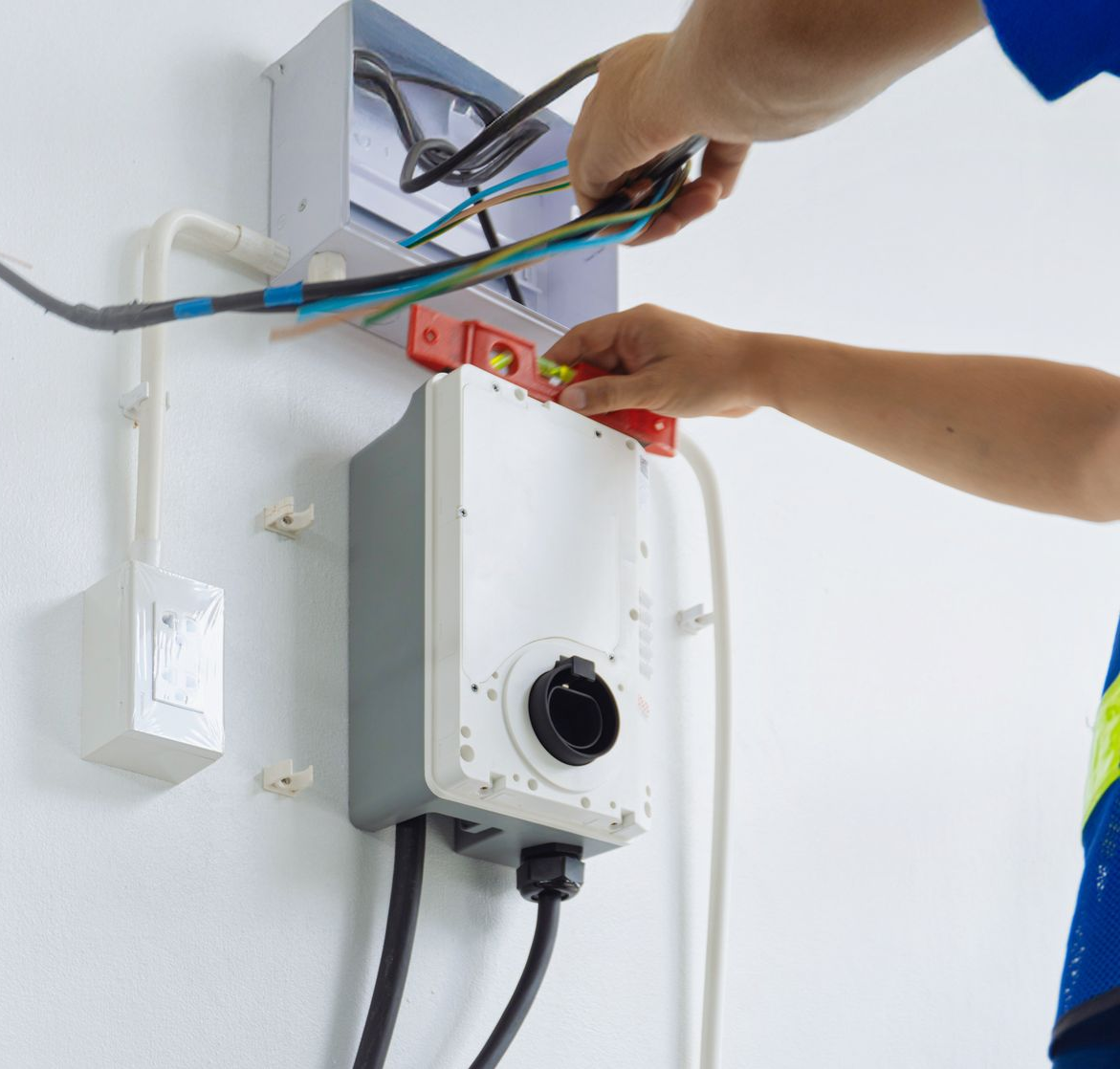
Dedicated Charging Without Extension Cords or Adapters
EV Charger Installation in Mt. Washington for properties where electric vehicles require faster, safer home charging
Standard 120-volt outlets deliver three to five miles of range per hour, requiring overnight charging to recover a typical commute, and shared circuits trip breakers when other appliances draw power simultaneously. Mingus Electric installs Level 2 EV chargers in Mt. Washington for homeowners and commercial property owners adding electric vehicles, providing dedicated 240-volt circuits that deliver 25 to 40 miles of range per hour depending on vehicle acceptance rate and charger output. Proper installation requires evaluating existing panel capacity before a high-draw continuous load is added, preventing overloaded panels and ensuring the charger operates reliably without affecting other circuits.
EV charger installation involves calculating available panel capacity, installing a dedicated 40- or 50-amp circuit, running appropriate wire gauge from the panel to the charging location, mounting the charger unit or installing the correct receptacle configuration, and testing the circuit under full load to verify proper operation. Some installations require panel upgrades or load management devices when existing service cannot support the additional continuous load.
Arrange a site evaluation to assess your electrical panel, determine charger placement, and identify any capacity upgrades required before installation.
What EV Charger Installation Actually Accomplishes
Level 2 chargers operate on 240-volt circuits similar to electric dryers or ranges, delivering significantly higher charging current than standard outlets, and require wire sized for continuous duty since charging sessions often last several hours. Charger placement considers vehicle parking location, cable length limitations, and wire routing from the panel to minimize conduit runs and installation cost while keeping the charger accessible.
Once installation is complete, you plug in your vehicle using the manufacturer's charging cable, the charger delivers consistent power without tripping breakers or causing voltage drops affecting other devices, and the vehicle reaches full charge in a fraction of the time required by standard outlets. The charging circuit operates independently from household lighting and appliances, and panel labels clearly identify the dedicated EV circuit for future reference.
Charger installation includes circuit sizing, wire installation, charger mounting or receptacle configuration, panel integration, and final testing, but does not include vehicle-specific charging cable upgrades, Wi-Fi network setup for smart chargers, or electrical work unrelated to the charging circuit itself.
What Property Owners Usually Ask
EV owners planning charging installations want to understand electrical requirements, costs, and whether existing panels can support the additional load.
What happens if my panel cannot support an EV charger circuit?
The main panel is upgraded to higher amperage capacity, or load management devices are installed to temporarily reduce power to lower-priority circuits like water heaters when the EV charger is operating, allowing the charger to function without exceeding panel limits.
How is the charger circuit sized for different vehicles?
Circuit sizing depends on the charger's maximum output and the vehicle's onboard charging capacity, with most residential installations using 40-amp circuits for 32-amp chargers or 50-amp circuits for 40-amp chargers, though some vehicles cannot accept the full output.
When should I install an EV charger instead of using a standard outlet?
Standard 120-volt outlets work for plug-in hybrids with small batteries or low-mileage drivers, but fully electric vehicles with large battery packs require Level 2 charging to recover daily driving range overnight without leaving the vehicle plugged in for extended periods.
Why do some EV charger installations cost more than others in Mt. Washington?
Installation cost varies based on distance between the panel and charging location, whether the panel has available breaker spaces and capacity, and whether service upgrades or trenching for underground conduit are required to reach detached garages or outdoor parking areas.
What type of charger connection should I install?
Hardwired chargers are permanently connected and cannot be unplugged, while NEMA 14-50 or 6-50 receptacles allow the charger to be disconnected and relocated, with the choice depending on whether you expect to change chargers or move the installation in the future.
Mingus Electric evaluates electrical panels, installs dedicated circuits, and mounts Level 2 chargers or receptacles for safe, code-compliant EV charging. Contact us to discuss your vehicle specifications, parking setup, and panel capacity to plan your charging installation correctly.